
Why the usual comparisons won’t help you make this decision
Type “Midjourney vs. Stable Diffusion” into Google and you’ll get nearly the same answer everywhere: Discord bot versus open-source model, $10 subscription versus your own graphics card, pretty pictures versus tinkering freedom. Written for hobbyists deciding between a weekend project and a second monitor cable.
For a business, that’s the wrong question. If you’re producing product photos, campaign visuals, or catalog images at scale, you’re not choosing between two hobbies — you’re choosing between two licensing models, two data privacy architectures, and two cost structures that behave completely differently at business volume. And those three points are exactly what’s missing from practically every comparison article currently ranking.
This article closes that gap. You’ll get:
- The legally verified licensing limits of both providers (as of 2026)
- A GDPR assessment that distinguishes between cloud and self-hosted operation
- A real cost calculation at business volume (not 50 images/month)
- FLUX.2 as a third option missing from most comparisons
- A decision matrix instead of a blanket recommendation
Overview 2026: Midjourney, Stable Diffusion, and FLUX.2 compared
Most comparisons are technically outdated the moment they’re published. Here’s the current state:
| Criterion | Midjourney (V7 / V8.1 Alpha) | Stable Diffusion 3.5 | FLUX.2 (Black Forest Labs) |
|---|---|---|---|
| Model | Closed-source, cloud-only | Open-weight, self-hosted or cloud API | Open-weight (small) + proprietary variants |
| Access | Discord / web app | ComfyUI, Automatic1111, API | ComfyUI, API, cloud providers |
| Image quality out of the box | Very high, aesthetically consistent | High, often needs fine-tuning | Very high, strong text rendering |
| Commercial license | Revenue-dependent (see below) | Community License, revenue-dependent | Apache 2.0 (small variant) |
| Self-hosting possible | No | Yes | Yes |
| Custom training (LoRA/fine-tuning) | No | Yes | Yes |
| Entry price | $10/month (Basic) | Free (own hardware) / API from a few cents per image | Free (small, Apache 2.0) / API pricing varies |
Legal certainty: What your contract actually allows
This is the section most comparisons skip — and the one that actually matters in an audit or a cease-and-desist letter.
Midjourney: The revenue threshold many SMEs overlook
According to Midjourney’s terms of service (the section on copyright and commercial use): if you work for or run a company that generated more than $1,000,000 USD in gross revenue in the prior calendar year, you cannot legally use generated images commercially on a Basic or Standard plan. You need a Pro plan ($60/month) or Mega plan ($120/month).
Stable Diffusion: The Stability AI Community License
Stable Diffusion models (from SD3 onward) fall under the Stability AI Community License: commercial use is free as long as your company has under $1,000,000 USD in annual revenue — regardless of how the model is deployed. You may use the models, distribute them, and create your own derivatives (fine-tunes, LoRAs). Above that threshold, a paid Enterprise license from Stability AI is required. Older versions (SD 1.x/2.x) fall under the CreativeML Open RAIL-M License, which has no revenue threshold.
FLUX.2: The most business-friendly option
The FLUX.2 [klein] variant is released under the Apache 2.0 license — commercial use is permitted with no revenue threshold and no special license. For companies that want legal certainty without re-checking their license every time revenue grows, this is currently the most straightforward option among open-weight models.
Copyright: who owns the image?
Regardless of provider, a general principle applies across most jurisdictions, including Germany: purely AI-generated works without significant human creative input generally aren’t eligible for copyright protection — there’s no “work” in the legal sense, since there’s no human author. That means two things for businesses: you can typically use an AI-generated image (the provider’s license terms govern usage rights), but you may not be able to exclusively protect it from imitation. For logos or core brand assets, that’s a meaningful difference from traditionally commissioned design work.
When it comes to commercial use of AI-generated images, what matters isn’t only what the model is licensed to do — it’s what the provider’s contract actually guarantees in a dispute.
GDPR and data privacy: cloud vs. self-hosted
This point is also missing from most comparisons entirely — even though for many mid-sized companies, it’s the actual dealbreaker.
Midjourney runs exclusively in the cloud (Discord or the web app operated by Midjourney Inc., USA). Prompts, uploaded reference images, and generated assets therefore always leave your company. If you upload sensitive product data, unreleased design drafts, or images containing personal data, you need a solid legal basis for transferring that data to the US — Midjourney does not, in practice, offer a data processing agreement (DPA).
Stable Diffusion and FLUX, by contrast, can be run entirely self-hosted — on your own servers or with a European cloud provider. In that case, neither prompts nor image data leave your infrastructure, and the GDPR question reduces to your own IT security rather than a third-party vendor contract.
| Midjourney | Stable Diffusion / FLUX (self-hosted) | |
|---|---|---|
| Data transfer to third parties | Yes, mandatory (cloud) | No, when self-hosted |
| DPA with provider possible | Practically not offered | N/A (no external processor) |
| Suitable for images with personal data | Only with caution/anonymization | Yes, under your own control |
| Suitable for unreleased products | Risky (provider’s servers) | Yes |
| Setup effort | None | GPU server, model deployment required |
The real cost calculation: what happens at business volume?
Almost every comparison calculates costs at consumer-level volume (under 200 images/month). At that volume, Midjourney is almost always cheaper. But the math flips much earlier than most articles suggest:
| Volume/month | Midjourney (Standard/Pro depending on revenue) | Stable Diffusion (cloud API) | Stable Diffusion (self-hosted, own GPU) |
|---|---|---|---|
| 100 images | ~$30/month | ~$5–15/month | Setup costs dominate, uneconomical |
| 500 images | ~$60/month (Pro plan) | ~$25–60/month | Break-even after approx. 6–9 months |
| 2,000 images | ~$120/month (Mega) or multiple seats | ~$100–250/month | Break-even after approx. 2–4 months |
| 10,000+ images | Multiple Mega seats, effectively not scalable | Scales linearly with API price | Cost per image approaches zero |
Your rule of thumb: Above roughly 500 images/month, a Stable Diffusion or FLUX cloud API starts to become cheaper than multiple Midjourney seats. Above several thousand images/month, dedicated GPU infrastructure typically pays for itself within a few months — and cost per image afterward drops to near-pure electricity cost.
Business use cases: where each tool actually shines
E-commerce and product images
Stable Diffusion and FLUX play to their strength here: LoRA training on your own products. Instead of re-prompting every time, you train a small add-on model on your product photos and generate as many variants as you like — new backgrounds, lifestyle contexts, color options — with consistent product shape. We describe this exact pattern (generating product photos, background swaps, variants, lifestyle shots) in more detail on our Stable Diffusion technology page. Industry reports from e-commerce document low-double-digit conversion gains from AI-optimized product imagery — the effect usually comes less from “prettier” images and more from having more context and lifestyle variants per product.
Marketing, campaigns, and social media
Midjourney is often the faster choice here: one Discord prompt, a few minutes, a consistently high aesthetic standard with no setup. For campaign visuals, social media graphics, and moodboards where speed and visual impact matter more than exact product fidelity, the effort per image is hard to beat.
Consistent brand worlds across many assets
Once a brand needs exactly the same characters, colors, or products across dozens of assets, Midjourney hits its limits — style references help, but true reproducibility (same seed, same ControlNet setup) is only offered by Stable Diffusion or FLUX. FLUX.2 additionally supports multi-reference control (up to 10 reference images at once) and precise text rendering in images — relevant for infographics, UI mockups, or packaging design with readable text.
Presentations, catalogs, and internal documents
For one-off, non-recurring visuals (blog headers, presentation slides, ebook covers), setting up your own infrastructure rarely pays off — here, a Midjourney or cloud API subscription is usually the more pragmatic choice.
Which tool fits your use case?
We analyze your image volume, data privacy requirements, and brand consistency needs, and recommend the right solution — from Midjourney licensing to self-hosted infrastructure with LoRA training.
Automation: image generation as part of your workflow
The biggest difference that almost no comparison covers: Midjourney has no official API — any automation runs through unofficial Discord bot workarounds that are unstable and legally uncertain. Stable Diffusion and FLUX, by contrast, are API-first from the ground up and integrate cleanly into existing processes:
- n8n or Make as an orchestration layer: pull product data from your shop system, auto-generate prompts, produce images via the Stable Diffusion or FLUX API, and feed the result directly into your CMS or product catalog
- Batch processing entire product catalogs overnight instead of manual, one-by-one prompting
- Quality assurance as a workflow step, such as automatic resolution or brand-color checks before publishing
We show how such an automation is built technically in detail in our n8n workflow automation tutorial and in our n8n vs. Make vs. Zapier comparison for the orchestration layer.
Decision matrix: which tool for which case?
Instead of a blanket recommendation — an assessment based on the four factors that actually decide this in practice:
| Your situation | Recommendation |
|---|---|
| Low volume (under 200 images/month), fast campaign visuals, no sensitive data | Midjourney — fastest to start, no setup |
| Medium to high volume (500+ images/month), recurring product images | Stable Diffusion or FLUX via API — better cost curve, LoRA training possible |
| Sensitive data, unreleased products, strict GDPR requirements | Stable Diffusion or FLUX, self-hosted — data stays in-house |
| Automated content pipeline (shop → image → CMS) | Stable Diffusion or FLUX via API — Midjourney has no official API |
| Company with over $1M annual revenue, low image volume | Midjourney Pro/Mega (required by license) or FLUX.2 [klein] (Apache 2.0, no revenue threshold) |
| Consistent brand world across many assets, exact reproducibility needed | Stable Diffusion or FLUX with ControlNet/seed control |
Frequently asked questions
Can I use Midjourney images commercially in my business? Yes, in general — with one important restriction: if your company generates more than $1,000,000 USD in annual revenue, you’re required to have a Pro or Mega plan. Basic and Standard plans are then no longer license-compliant for commercial use of the assets under the terms of service.
Is Stable Diffusion free for businesses? For companies under $1,000,000 USD in annual revenue, commercial use is free under the Stability AI Community License — you only pay for your own infrastructure or a cloud API. Above that revenue threshold, a paid Enterprise license is required.
Is Midjourney or Stable Diffusion more GDPR-compliant? Stable Diffusion (and FLUX) are more GDPR-compliant in practice because they can run self-hosted — your data then never leaves your infrastructure. Midjourney runs exclusively in the cloud with a US provider, and a standard DPA is practically not offered.
Can I integrate Midjourney or Stable Diffusion into an automated workflow? Stable Diffusion and FLUX offer official APIs and integrate easily with n8n, Make, or custom systems. Midjourney has no official API — automation only works through unstable, legally risky workarounds.
What is FLUX, and why is it rarely included in comparisons? FLUX is the AI image model family from Black Forest Labs, founded by former Stable Diffusion developers. As of 2026, FLUX.2 is considered technically competitive with Midjourney and Stable Diffusion 3.5, but many older comparison articles simply haven’t caught up yet. The Apache 2.0-licensed “klein” variant is currently the legally simplest open-weight option for businesses.
Do I own the images I generate with AI? Usage rights are governed by the provider’s contract (Midjourney, Stability AI, Black Forest Labs). Under most copyright frameworks, however, purely AI-generated images without significant human creative input generally aren’t eligible for standalone copyright protection — a difference from traditionally commissioned design work that can matter especially for core brand assets.
At what image volume does Stable Diffusion become financially worthwhile over Midjourney? As a rough guideline: above roughly 500 images/month, a Stable Diffusion or FLUX cloud API starts becoming cheaper than multiple Midjourney seats. At several thousand images/month, dedicated GPU infrastructure typically pays for itself within a few months.
Can Midjourney and Stable Diffusion be used in parallel? Yes, and in practice that’s the most sensible setup for many companies: Midjourney for fast campaign ideas, Stable Diffusion or FLUX for recurring, automated product image production.
Conclusion: The decision isn’t about aesthetics
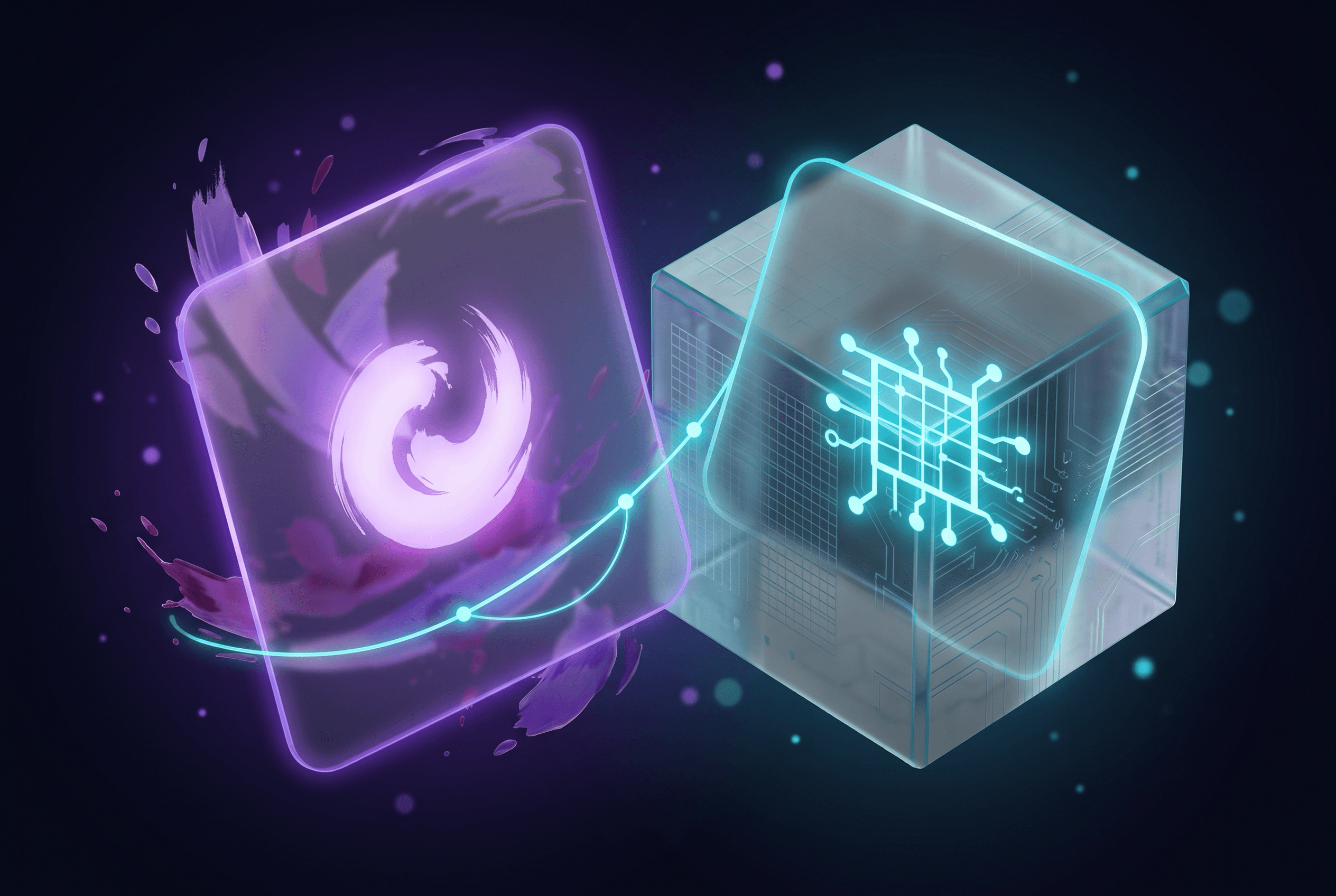
Midjourney and Stable Diffusion (or FLUX) aren’t competitors in the same category once real business volume enters the picture. Midjourney wins on speed and ease of entry. Stable Diffusion and FLUX win on cost curve, data privacy, automatability, and brand consistency across many assets.
Your next step:
- Check your current and planned image volume per month
- Clarify whether sensitive or unreleased image data is involved
- Decide using the decision matrix above — or combine both approaches
- If using Midjourney, check your annual revenue against the license threshold
Want to put AI image generation to work in your business?
From tool selection through LoRA training on your own products to automated workflow integration — we help companies adopt AI image generation in a legally sound, GDPR-compliant way.
Sources
- Stability AI: Community License
- Midjourney: Comparing Midjourney Plans
- Terms.Law: Midjourney Commercial Use Rights 2026
- IPLaw.lol: AI contracts and terms — rights to AI outputs
- Kanzlei Herfurtner: Stable Diffusion AI — legal requirements for AI-generated images
- Boddenberg: AI images in business — on-premise instead of cloud